
Why Shred Confidential Papers and Media in 2026?
Shredding confidential papers and electronic media is essential to protect sensitive data from identity theft, ensure legal compliance with privacy laws like HIPAA or FACTA, and prevent catastrophic data breaches. Professional destruction guarantees that information is irrecoverable, safeguarding your business reputation, financial stability, and client trust in a digital world.
Why is shredding confidential papers important for business?
In an era where digital threats dominate the headlines, it is easy to forget that physical paper remains one of the greatest vulnerabilities for any organization. For businesses in Orange County , the importance of shredding confidential papers cannot be overstated. Every day, offices generate vast amounts of paperwork containing sensitive information: employee social security numbers, client addresses, proprietary business strategies, and detailed financial records. If these documents are simply tossed into a trash can or a standard recycling bin, they become low-hanging fruit for corporate spies and identity thieves.
Identity theft is not just a personal concern; it is a corporate nightmare. When a business fails to protect the private information of its employees or customers, it faces severe legal repercussions and a devastating loss of credibility. Professional business record shredding ensures that your documents are rendered completely unreadable before they ever leave your sight. This proactive approach to data security acts as a primary defense mechanism, closing the physical loopholes that hackers and thieves often exploit. By implementing a consistent shredding policy, you create a culture of security that prioritizes the protection of every stakeholder involved with your company.
The evolution of document security
Document security has transitioned from a simple task of tidying up the office to a complex operational requirement. Years ago, a small office shredder might have been sufficient for a few stray documents. However, today’s regulatory environment and the sophisticated methods used by data thieves require a more robust solution. Modern document destruction is about more than just cutting paper into strips; it is about a verified chain of custody and industrial-grade technology that ensures total destruction.
For many industries, such as those handled by Legal Records Shredding services, the stakes are even higher. The evolution of security means moving toward automated, high-volume solutions like Mobile Shredding , where the destruction happens right at your doorstep. This shift reflects a broader understanding that data is a business's most valuable—and most dangerous—asset. As we move further into 2026, the definition of "confidential" continues to expand, encompassing everything from printed emails to old ID badges, necessitating a comprehensive strategy for physical data management.
How does electronic media shredding prevent data breaches?
While paper is a significant risk, the rise of electronic storage has introduced a new frontier of vulnerability. Many businesses mistakenly believe that deleting files or reformatting a hard drive is enough to protect their data. Unfortunately, digital information is incredibly resilient. Skilled technicians can easily recover data from drives that have been "wiped" using standard software. This is why Hard Drive Shredding is the only foolproof method to ensure that retired hardware does not become a gateway for a massive data breach.
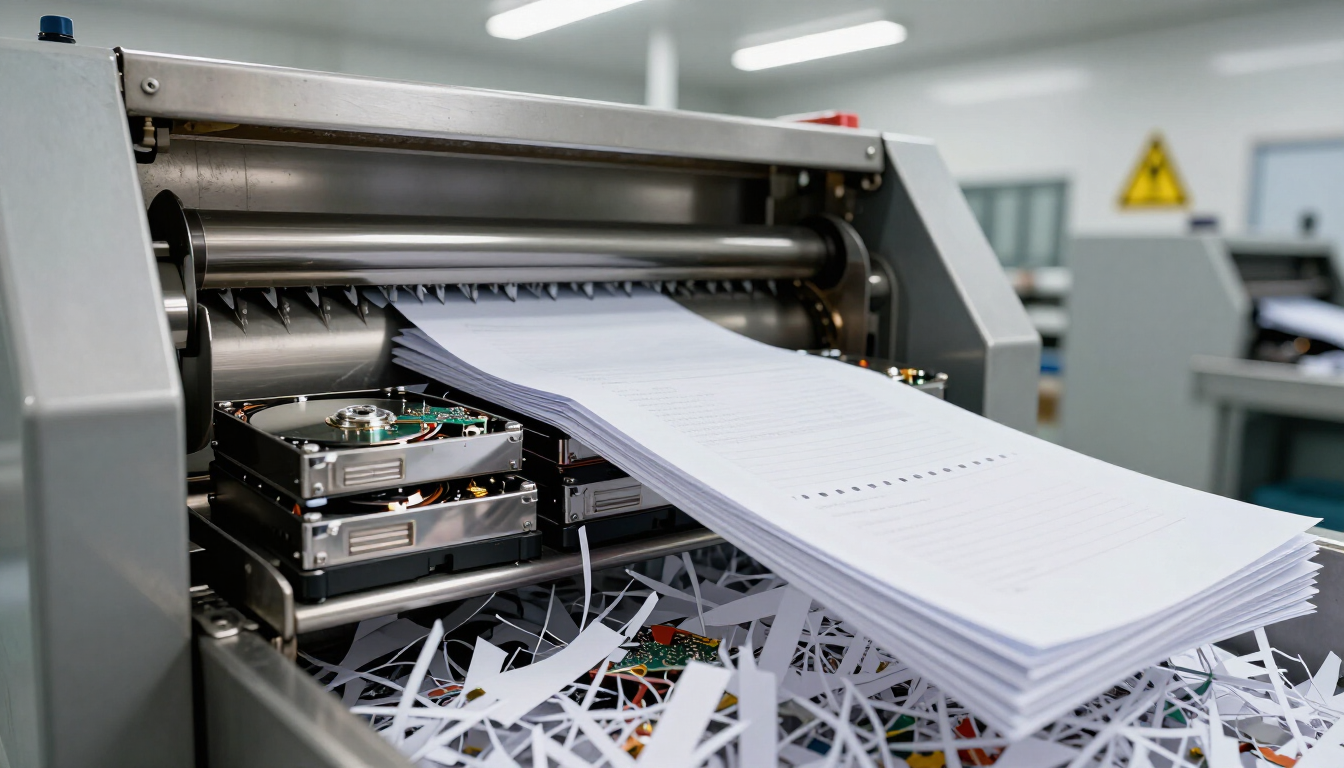
Electronic media shredding involves the physical disintegration of hard drives, SSDs, and other storage devices. When a drive is put through an industrial shredder, the magnetic platters or flash memory chips are broken into tiny fragments, making data recovery physically impossible. This process is vital for any organization upgrading its IT infrastructure. Whether you are a small startup or a large government office, the hardware you retire must be handled with the same level of scrutiny as your most sensitive paper files. Failing to do so leaves a digital trail that can lead directly back to your secure servers.
Types of media that require professional destruction
Protecting your business requires looking beyond just the computer tower. Data is stored in various formats across the modern office. Consider the following items that should always be professionally destroyed:
- Old hard drives and solid-state drives (SSDs) from laptops and desktops.
- External storage devices, including USB thumb drives and portable backup drives.
- Optical media such as CDs, DVDs, and Blu-ray discs containing legacy data.
- Mobile devices, including old smartphones and tablets used by staff.
- Magnetic media like backup tapes and old floppy disks still sitting in storage.
What are the risks of improper document disposal?
The risks of improper disposal are both financial and reputational. When confidential documents are not shredded, they are subject to "dumpster diving," a practice where thieves scavenge through commercial waste to find sensitive information. In a legal context, once trash is placed on the curb, it is often considered public property, meaning the police—or criminals—don't even need a warrant to look through it. This creates a massive liability for any business that deals with private client data, especially in sectors like Financial Record Shredding .
Beyond the immediate threat of theft, improper disposal can lead to massive regulatory fines. Under various state and federal laws, businesses are required to protect consumer privacy. A single box of un-shredded medical files found in a landfill can result in six-figure penalties and mandatory monitoring by federal agencies. Furthermore, the damage to your brand can be irreparable. Clients want to work with partners they can trust. A public data leak caused by simple negligence can drive customers away and give competitors a significant advantage in the marketplace.
Legal compliance and document destruction standards
Compliance is one of the primary drivers behind the importance of shredding confidential papers. Various regulations mandate how information must be handled and destroyed. For example, the Health Insurance Portability and Accountability Act (HIPAA) sets strict standards for Medical Records Shredding , requiring that patient information be rendered essentially unreadable and indecipherable. Similarly, the Fair and Accurate Credit Transactions Act (FACTA) requires businesses to take "reasonable measures" to protect against unauthorized access to consumer information during disposal.
To meet these standards, businesses often turn to professional services that provide a Certificate of Destruction. This document serves as legal proof that your materials were handled according to industry best practices and government regulations. It is not just about the act of shredding; it is about the documentation of the process. In the event of an audit or a legal dispute, having a clear record of your destruction schedule and methods is your best defense. This level of compliance is standard for on-going shredding services, providing peace of mind to business owners and compliance officers alike.
How often should your business schedule shredding?
The frequency of your shredding service depends largely on the volume of sensitive material your office generates and your specific industry requirements. A one-size-fits-all approach rarely works for data security. Many businesses find that a regular, scheduled service is the most effective way to prevent the accumulation of sensitive waste. When bins and consoles are provided by a professional service, employees have a secure place to drop documents immediately, rather than letting them sit on desks or in open recycling containers.
For some, a weekly or bi-weekly pickup is necessary to manage high volumes of paperwork. For others, a one-time purge shredding event might be more appropriate, such as at the end of a fiscal year or after a major office move. The goal is to ensure that confidential information is never left vulnerable for longer than necessary. By assessing your document lifecycle, from creation to disposal, you can determine a cadence that keeps your office clean and your data secure without disrupting your daily operations.
Choosing the right destruction service for your industry
Different industries have unique needs when it comes to destruction. A bank requires different security protocols than a local school district or a small medical clinic. When selecting a partner, look for a company that understands the specific challenges of your sector. For instance, Product Destruction is a specialized service for businesses that need to dispose of branded items, faulty products, or expired goods to protect their brand integrity and prevent grey-market sales.
Security is not a commodity; it is a specialized service. Ensure your provider uses background-checked technicians and high-security vehicles. For those in Orange County, local expertise matters. A provider who knows the local business landscape and the specific regulatory environment of California can offer insights that a national conglomerate might miss. Whether you need Hard Drive Shredding or specialized Mixed Media Shredding, the right shredding partner will treat your data with the highest level of confidentiality.
Benefits of professional shredding
Operating a business in Orange County means navigating a competitive and highly regulated market. Professional shredding services offer a range of benefits that go beyond simple security. First and foremost is efficiency. Asking employees to use a small office shredder is a waste of valuable man-hours and often leads to equipment failure. Industrial-grade Mobile Shred Trucks can process thousands of pounds of paper in a fraction of the time, allowing your team to focus on their core responsibilities.
Additionally, professional shredding is an environmentally responsible choice. Once paper is shredded by a secure service, the fragments are typically baled and sent to paper mills for recycling. This ensures that your commitment to security also supports your sustainability goals. In a region that values environmental stewardship, being able to say that 100% of your destroyed documents are recycled is a significant brand benefit. It’s a win-win: you protect your data while reducing your carbon footprint.
Summary of Key Takeaways
Understanding the importance of shredding confidential papers and electronic media is the first step toward a more secure business. As we have explored, the risks of negligence are far too high to ignore, ranging from identity theft to massive legal penalties. By partnering with a professional destruction service, you ensure that your business remains compliant, efficient, and protected against the ever-evolving threats of the modern world.
- Identity Protection: Shredding is the most effective way to prevent identity theft and corporate espionage.
- Legal Compliance: Stay on the right side of HIPAA, FACTA, and GLBA with certified destruction processes.
- Total Destruction: Electronic media like hard drives must be physically shredded to ensure data is non-recoverable.
- Efficiency & Sustainability: Save time and help the environment by using professional services that recycle 100% of shredded material.
- Peace of Mind: A Certificate of Destruction provides the legal proof you need for audits and security protocols.
Whether you are managing a medical office in Irvine or a financial firm in Newport Beach , your priority should always be the security of your information. Don't wait for a data breach to happen before you take action. Evaluate your current disposal methods today and make the switch to a secure, professional shredding solution.
Recent Posts


